IoT
Edge AIVoice Control
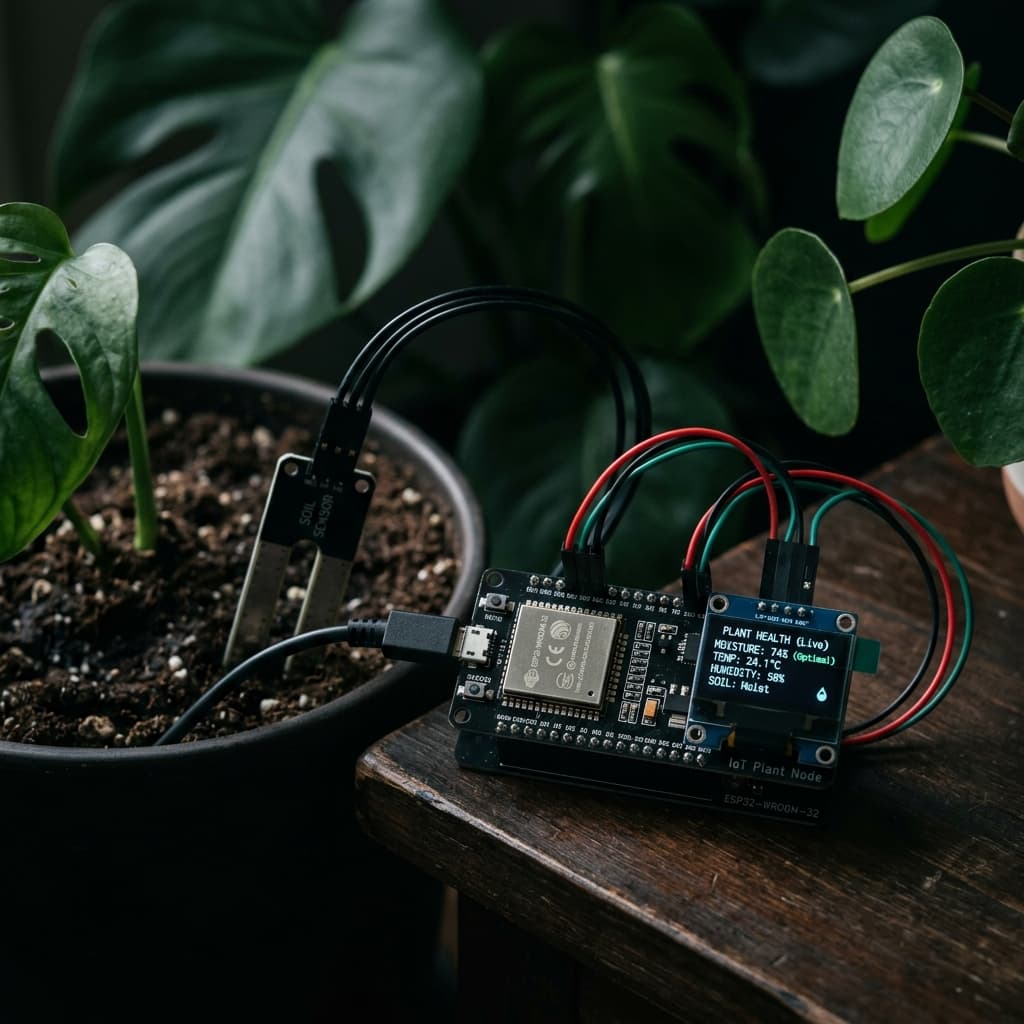
SmartPot — AI Plant Companion
Voice-controlled ESP32 plant assistant with edge AI and sensor intelligence.
ESP32FreeRTOSTensorFlow LiteMQTT
Firmware & AI Systems Engineer
View Details →Fabricating high-durability enclosures, functional mechanical parts, and visual prototypes using FDM additive manufacturing and parametric CAD modeling.
3+ Years
Building systems
Remote + Onsite (Guwahati Area)
CAD Modeling → Test Fit Print → Production Assembly
Optimization Summary
Summary: Generic 3D prints fail because the designer ignores plastic shrinkage, printer tolerances, or wall thickness requirements. I model with print mechanics in mind.
“The custom PCB doesn't fit inside the 3D-printed enclosure.”
I export physical 3D models of routed boards from KiCad, importing them into Fusion 360. This guarantees mounting pins, USB port cutouts, and LED openings align perfectly.
“The 3D-printed brackets snap under normal mechanical load.”
I design parts for additive manufacturing (DFAM), aligning layer lines with load vectors, adjusting wall thickness, and printing with high-strength PETG or ABS.
“Enclosure parts warp or fail to snap together cleanly.”
I design clearances (typically 0.15mm to 0.25mm) into parametric CAD files, modeling snap-fit joints and screw inserts to prevent warping.
“The casing melts when placed near warm voltage regulators.”
I evaluate thermal profiles, selecting heat-resistant materials (like PETG/ABS) and adding ventilation slots to prevent heat build-up.
Summary: I model and print physical enclosures designed to align with custom PCB footprints. I do not print simple toys or generic models.
Inventors needing custom-fitted enclosures (like the SmartPot plant companion shell or modular NanoLeaf hexagons) designed to snap-fit with PCBs and USB ports.
Engineering teams building physical assemblies, robotic joints (like my 6-DOF robotic arm servo brackets), or sensor mounting brackets for field work.
Guwahati-based companies requiring replacement gears, custom mounts, or custom visual mockups without investing in expensive molds.
Designers seeking physical models of concepts to evaluate weight, volume, tolerances, and assembly layouts before manufacturing.
Summary: You receive both the physical prototypes and print-ready parametric CAD source files.
Clean, assembled physical parts printed in PETG, PLA, or ABS, complete with brass threaded inserts and assembly screws.
Parametric CAD models (.f3d) containing history trees, allowing you to edit dimensions and wall thickness.
Standard STEP models for injection mold builders, and print-ready STL/3MF files for slicing.
A Markdown document listing dimensions, printer settings, assembly instructions, and hardware details.
Summary: I model and print parts that match physical hardware and mechanical specifications.
PCB-fitted casings. I design casings incorporating ventilation slots, snap-lock snaps, and brass threaded screw inserts (such as SmartPot casings), ensuring boards fit snugly.
Load-bearing elements. I design multi-axis motor joints and custom brackets (like my 6-DOF robotic arm joints) engineered to distribute load and connect servos.
Modular visual components. I model interconnecting parts (such as NanoLeaf wall tiles) designed to lock together and diffuse light cleanly.
Summary: I design mechanical parts using parametric tools and print using calibrated FDM setups.
Summary: This document outlines Jishnu Mahanta's engineering approach to designing structural parts in Fusion 360, calibrating FDM print tolerances, and assembling durable microcontroller enclosures.
Traditional CAD modeling focuses on subtractive milling or injection molding. Prototyping casings using FDM (Fused Deposition Modeling) 3D printers requires Design for Additive Manufacturing (DFAM), adjusting parameters to account for layer lines, extrusion width, and plastic thermal shrinkage.
Clearances on Snap-Fits
Modeling interlocking parts (such as casing lids or snap joints) without clearances will result in parts fusing together or cracking. Standard FDM printers require a clearance threshold of 0.15mm to 0.25mm on mating surfaces to allow components to snap together smoothly without friction slips or loose fits.
When modeling physical casings for custom PCBs, I export the physical board models directly from KiCad and import them into Fusion 360. This guarantees that USB port cutouts, mounting pins, and LED indicators align precisely with routed components.
Below is the mechanical layout checklist I apply in Fusion 360 before slicing and printing casings:
Layer Line Alignment
Always align print orientations so that physical stress is perpendicular to layer lines. Since layers fuse together, parts are weaker along the Z-axis. Aligning joints along X and Y axes increases mechanical load capacity.
Slicing translates 3D models into G-code commands. Standard PLA plastic is fine for visual mockups but warps easily under sunlight or warm electronics. I optimize slicing parameters in PrusaSlicer/Cura and select high-durability filaments (PETG or ABS) for structural components.
Incorrect Infill Patterns for Load-Bearing Parts
A common mistake is using high infill density (e.g. 80% Grid infill) to make parts strong. This wastes filament and increases print time without improving strength. Instead, increasing the wall loop count (from 2 to 4 or 5) and selecting a Gyroid infill pattern (at 20-30% density) yields much stronger, lightweight parts.
  Naively Printed (Grid Infill)          Optimized DFAM (Gyroid Infill)
  +---------------------------+          +---------------------------+
  |  |  |  |  |  |  |  |  |   |          | ~ ~ ~ ~ ~ ~ ~ ~ ~ ~ ~ ~ ~ |
  |  |  |  |  |  |  |  |  |   |          | ~ ~ ~ ~ ~ ~ ~ ~ ~ ~ ~ ~ ~ |
  |  - High weight            |          | - Omni-directional load   |
  |  - Directional weakness   |          | - 30% lighter weight      |
  +---------------------------+          +---------------------------+
The NanoLeaf Modular Interconnects
During the development of the Lumex Nanoleaf System, panels had to lock together repeatedly. The first PLA prints broke easily at the joint clips. I redesigned the joints in Fusion 360 using a 0.2mm tolerance, switched the filament to PETG, and adjusted the slice orientation. This created sturdy snap-joints that survived thousands of assembly cycles.
To construct robust enclosures that can be disassembled for debugging, I avoid driving screws directly into plastic threads (which strip easily). Instead, I model pilot holes and heat-press brass threaded inserts (M2/M3) into the casing:
Summary: I prototype systematically, verifying virtual measurements before sending designs to the printers.
Phase 1 of 9
We define constraints: PCB sizes, USB locations, button heights, and battery volumes. I build a virtual spatial envelope mapping clearances.
Dynamic projects fetched from the portfolio database demonstrating execution.
Voice-controlled ESP32 plant assistant with edge AI and sensor intelligence.
Firmware & AI Systems Engineer
View Details →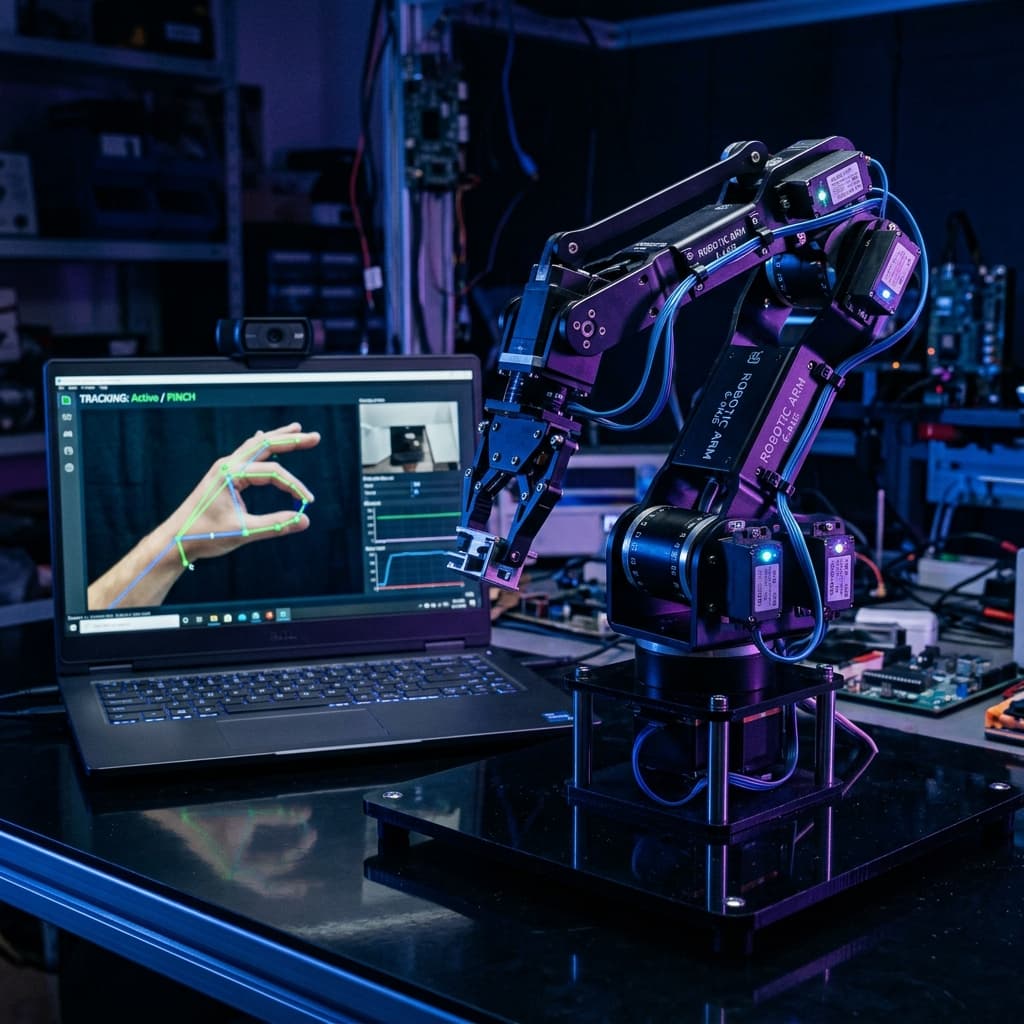
Gesture-controlled multi-axis arm with computer vision.
Firmware & System Engineer
View Details →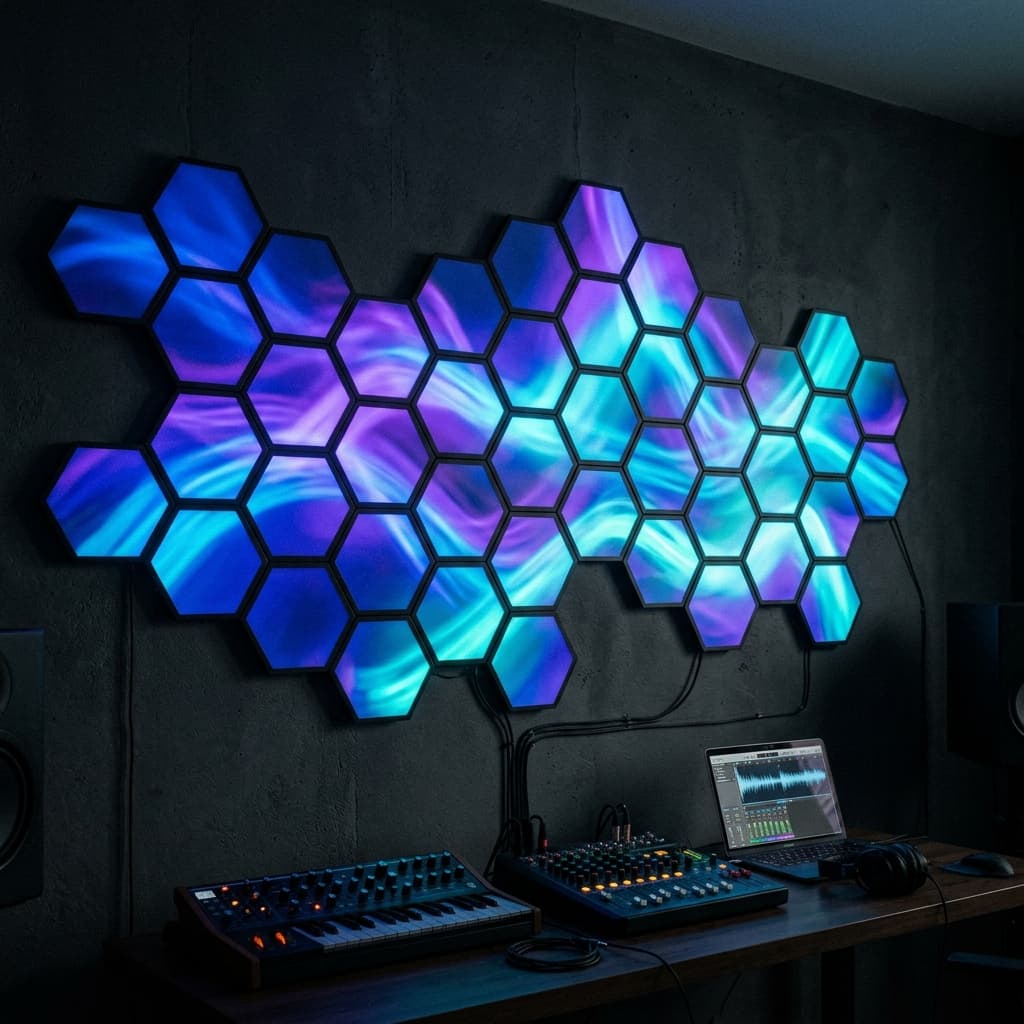
Audio-reactive modular lighting with custom firmware.
Embedded Engineer
View Details →Summary: Typical print shops print raw downloads. I design custom enclosures from scratch to match physical PCB dimensions.
| Design Criteria | My Prototyping Services | Typical 3D Print Shop / Hub |
|---|---|---|
| Custom CAD Design from Scratch | ✓ Custom modeled to fit your PCB footprint and battery geometry. | ❌ Requires you to provide print-ready STL files; cannot edit designs. |
| Electronic Component Integration | ✓ Enclosures designed to match KiCad 3D models and USB openings. | ❌ No understanding of component offsets or pin spacing. |
| Threaded Metal Inserts (M2/M3) | ✓ Installed using heat-setting tools for secure assembly. | ❌ Direct plastic screw holes that strip after a few uses. |
| Material Selection & Stress Analysis | ✓ Selects PETG/ABS and aligns print layers with load vectors. | ⚠️ Simple PLA prints that warp under direct sunlight or heat. |
Summary: Based in Guwahati, I deliver custom 3D printed parts and rapid prototyping consulting across Assam, sending components directly via express post. Physical verification is supported for projects in Jorhat, Dibrugarh, Silchar, Nagaon, and Tezpur.
For clients across other major Indian tech hubs (Bengaluru, Hyderabad, Pune, Chennai, Mumbai, Delhi NCR) and global locations (US, Canada, UK, Australia, Germany, Singapore), I share interactive 3D STEP models, send high-resolution video bring-up updates, and ship physical enclosures via secure courier.
Summary: Read my notes on design clearance, tolerances, and hardware integration.
Detailed parameters detailing snap clearances, bridge angles, and port alignment configurations in Fusion 360.
An engineering evaluation testing heat warping, UV resistance, and layer strength under load.
A guide detailing hole sizing, temperature settings, and assembly methods to prevent cracking.
Structured query answers targeting specific informational searches.
Ready to move from a raw PCB to a compact, professional enclosure? Let's design and print your prototype.